
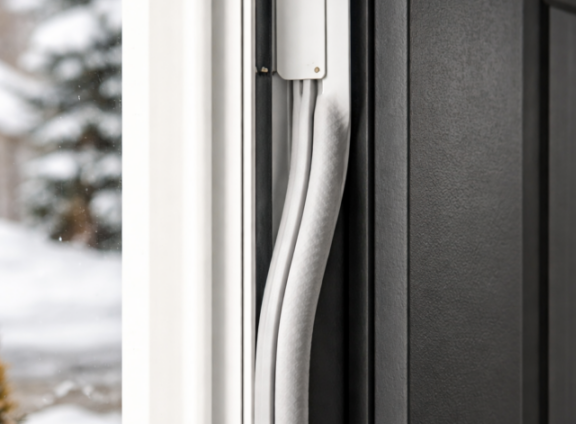
Choosing the right weatherstripping is crucial in Canada, as it matters far more than in milder climates. Many products that work fine in fall will harden, crack, or lose their seal once temperatures drop well below freezing.
If you want a door seal that survives real Canadian winters, this guide breaks down which types of weatherstripping actually work below −20°C, which ones fail, and what professionals use on cold-climate homes.
Why Weatherstripping Fails in Cold Weather
In winter, weatherstripping is exposed to:
- Extreme temperature swings
- Repeated compression from opening and closing
- Dry indoor air and moist outdoor air
- Ice buildup near thresholds
Cheap materials lose flexibility, stop sealing, and allow cold air to leak in even when the door looks closed.
The Best Weatherstripping Materials for Canadian Winters
1. Silicone Weatherstripping (Best Overall)
Silicone stays flexible in extreme cold and maintains its shape over time.
Why it works:
- Remains flexible below −30°C
- Doesn’t crack or harden
- Long service life
Best for:
- Exterior doors
- North-facing entrances
- Homes in northern or exposed locations
Downside: Costs more than foam, but lasts much longer.
2. EPDM Rubber (Professional Standard)
EPDM is commonly used by contractors because it balances durability and cost.
Why it works:
- Designed for outdoor temperature extremes
- Good resistance to moisture and UV
- Reliable compression seal
Best for:
- Steel and fiberglass doors
- Replacement seals in existing tracks
3. Magnetic Weatherstripping (Excellent for Steel Doors)
Magnetic seals work similarly to refrigerator doors and provide a consistent seal.
Why it works:
- Strong, even pressure along the frame
- Excellent air sealing
- Minimal wear over time
Best for:
- Steel exterior doors
- Doors with consistent alignment
Watch out: Poor installation reduces effectiveness.
Weatherstripping Types to Avoid in Cold Climates
Felt Strips
- Absorb moisture
- Freeze and flatten
- Fail quickly in winter
Low-Density Foam Tape
- Hardens in cold
- Loses compression
- Short lifespan
These are fine for temporary fixes but not for Canadian winters.
Best Weatherstripping by Door Location
Front and Back Doors
- Silicone or EPDM compression seals
- Adjustable aluminum carriers preferred
Garage-to-House Doors
- Magnetic or heavy-duty rubber
- Tight seal is critical for safety and warmth
Basement or Utility Doors
- EPDM or silicone
- Avoid foam due to moisture exposure
Door Bottom Seals Matter Too
Even the best perimeter weatherstripping won’t help if cold air enters under the door.
Best options:
- Adjustable door sweeps with rubber blades
- Automatic door bottoms for uneven floors
Avoid thin vinyl sweeps — they stiffen in cold weather.
When Weatherstripping Isn’t the Real Problem
If weatherstripping keeps failing, the issue may be:
- Door swelling due to moisture
- Frame movement from seasonal settling
- Threshold misalignment
If your door is sticking or rubbing in winter, read our guide on why doors swell in winter.
Final Verdict: What Professionals Use
For most Canadian homes:
- Silicone weatherstripping = best overall
- EPDM rubber = best value
- Magnetic seals = best for steel doors
Spending a little more on the right material prevents repeat replacements and keeps your home comfortable all winter.