
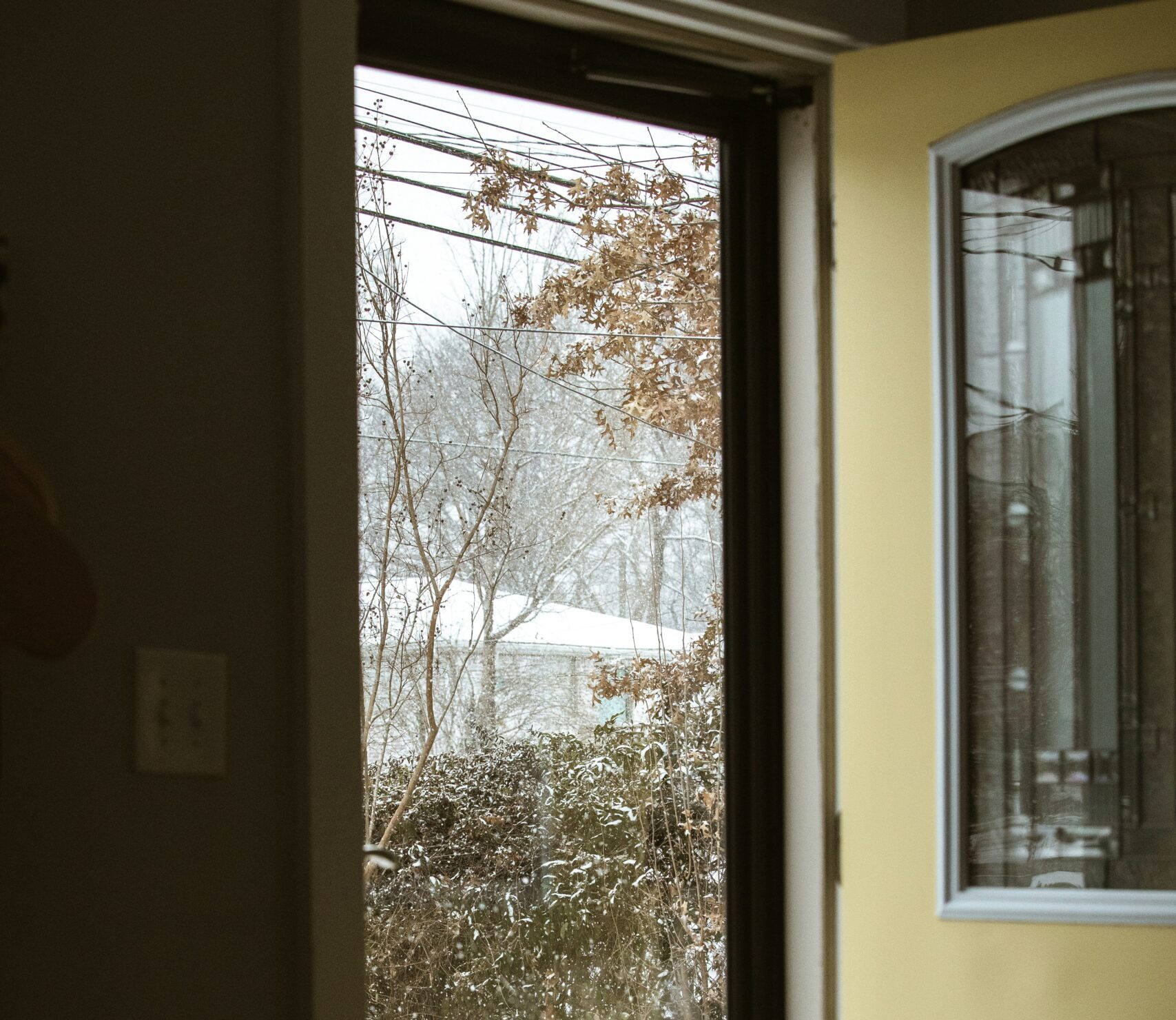
Doors swell in winter because changes in moisture, temperature, and minor house movement cause wood to expand or shift. This is a common seasonal issue and is usually fixable with simple adjustments.
Why Doors Swell in Winter
Even though winter air is dry outside, indoor conditions often change dramatically once heating systems kick in. Several factors can cause doors to swell or shift during colder months:
1. Moisture imbalance
Wood naturally expands and contracts with changes in moisture. In winter:
- Humid indoor air can be absorbed by the door
- Exterior doors experience temperature swings
- Condensation can form near door frames
This moisture imbalance causes wood fibers to expand, even if the door didn’t have problems in summer.
2. House movement
Cold temperatures can cause:
- Foundation movement
- Framing shrinkage
- Minor settling
These small shifts are enough to throw doors out of alignment, especially in older homes.
3. Door hardware loosening
Temperature changes can loosen:
- Hinges
- Screws
- Strike plates
A door that’s sagging even slightly can rub against the frame and feel like it’s “swollen.”
4. Poor ventilation or insulation
Cold exterior walls combined with warm interior air can trap moisture around doors, especially near entrances, garages, or basements.
How to Diagnose the Problem (Before Fixing Anything)
Before grabbing tools, take 5 minutes to figure out what’s actually causing the issue.
Step 1: Identify where the door is rubbing
- Top corner → usually hinge or frame shift
- Latch side → swelling or misalignment
- Entire edge → moisture expansion
Use a pencil to lightly mark where the door makes contact.
Step 2: Check hinge screws
Open the door and inspect the hinges:
- Loose screws are extremely common
- Tightening them often fixes the problem completely
This is always the first thing I check on a job site.
Step 3: Test humidity levels
If your home feels humid or you see condensation on windows, excess indoor moisture may be contributing to the issue.
Step-by-Step Fixes (Start Here)
Fix #1: Tighten or replace hinge screws
Tools needed:
- Screwdriver or drill
- Longer wood screws (2-3 inches)
How to do it:
- Tighten all hinge screws
- Replace one screw per hinge with a longer screw that bites into framing
- Test the door
This alone fixes a large percentage of winter door problems.
Fix #2: Adjust the strike plate
If the latch isn’t lining up:
- Loosen the strike plate screws
- Slightly reposition it
- Retighten and test
Small adjustments make a big difference.
Fix #3: Light sanding (last resort)
If the door is actually swollen:
Tools needed:
- Sandpaper (80–120 grit)
- Sanding block
- Vacuum or brush
Steps:
- Remove the door
- Sand only the tight area
- Remove small amounts at a time
- Reinstall and test
Warning: Do not aggressively sand—this can create gaps in summer.
Fix #4: Seal exposed wood
If you sanded:
- Prime and paint the exposed edge
- Or apply a clear sealer
Unsealed wood will absorb moisture again and recreate the problem.
Common Mistakes to Avoid
- Trimming the door immediately
- Removing too much material
- Ignoring hinge alignment
- Skipping moisture control
- Forcing the door closed (can damage the frame)
Tools & Materials You May Need
- Screwdriver or drill
- Longer wood screws
- Sandpaper
- Level
- Paint or wood sealer
These are basic homeowner tools—no specialty equipment required.
When to Call a Professional
You should consult a licensed professional if:
- The door frame is visibly twisted
- Structural movement is suspected
- The door rubs even after adjustments
- Exterior doors won’t seal properly
- You notice water damage or rot
Structural and exterior sealing issues should be handled properly to avoid long-term damage.
Frequently Asked Questions
Can cold weather alone cause doors to swell?
Indirectly, yes. Cold weather changes indoor humidity and causes framing movement, both of which affect doors.
Should I plane the door instead of sanding?
Planing removes material quickly and can cause problems later. Sanding gives you more control.
Will this fix last year-round?
If the root cause is addressed (alignment, moisture, sealing), yes. Otherwise, the problem may return seasonally.
Final Thoughts
Doors swelling in winter is frustrating, but it’s rarely a major issue. When doors swell in winter, the issue is often mistaken for a bad door, when it’s usually a seasonal moisture or alignment problem. Start with simple fixes like tightening hinges and checking alignment before making permanent changes.
When in doubt, go slow—and if the problem feels structural or exterior-related, bring in a professional. A properly functioning door isn’t just about convenience; it affects energy efficiency and home comfort too.