
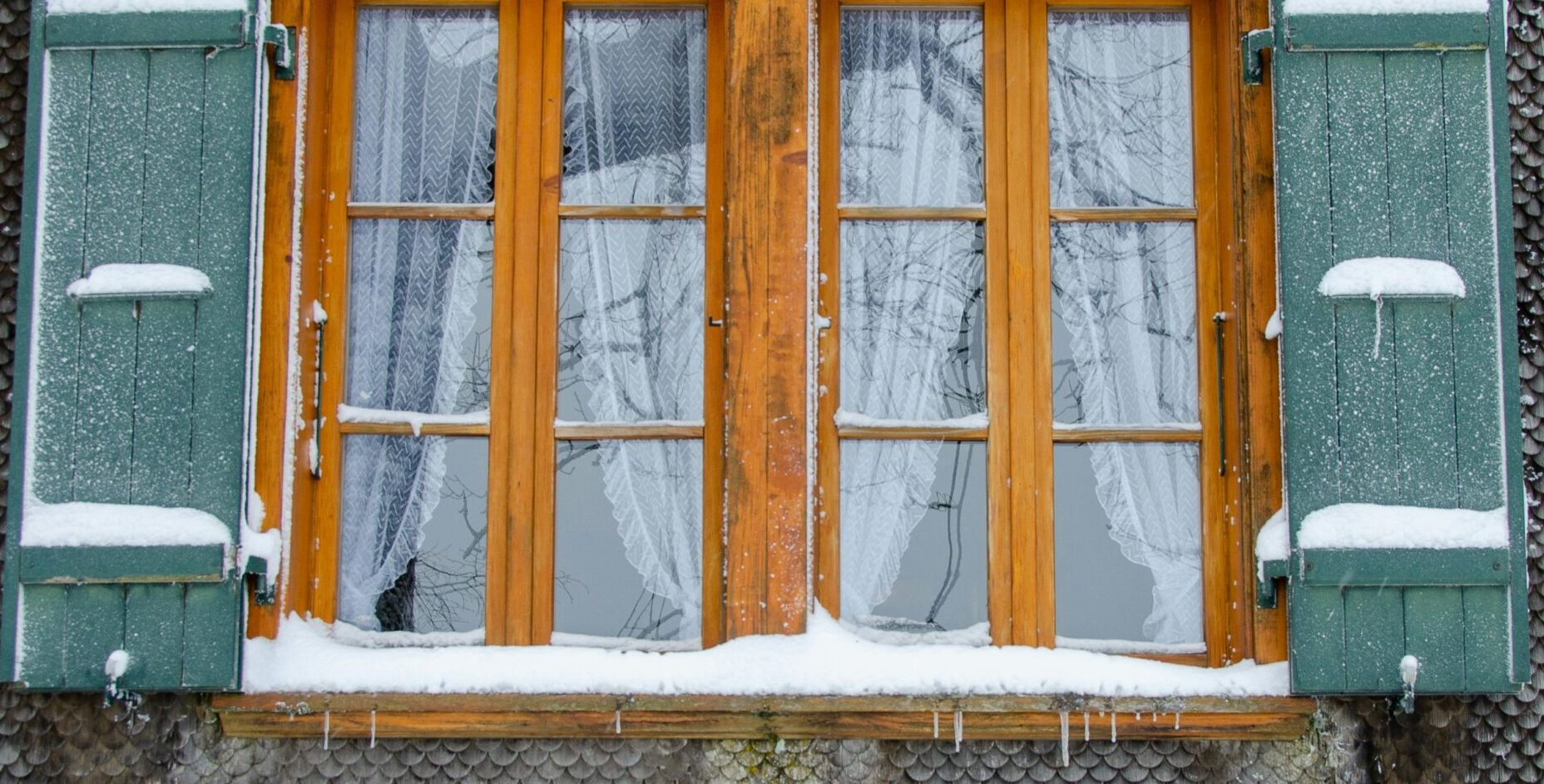
In cold Canadian winters, it’s common for homeowners to notice ice forming on their window sills. At first it might look harmless, but repeated ice buildup can lead to water damage, mold, and even ruined window frames.
Understanding why ice forms on windows in winter can help you fix the problem before it causes damage.
Why Ice Forms on Window Sills
Ice on window sills usually starts as condensation.
When warm indoor air containing moisture touches cold window glass, condensation forms and can freeze when temperatures drop far below freezing. This process is described in detail by Natural Resources Canada, which explains how cold window surfaces often cause moisture buildup during winter.
This happens most often in northern climates where winter temperatures regularly fall below −20 °C.
Common causes include:
High indoor humidity
If your home has too much moisture in the air, more condensation will form on windows.
Poor air circulation near the window
Closed curtains, blinds, or furniture blocking airflow can trap warm air against the window.
Very cold outdoor temperatures
Even good windows can freeze if humidity levels are high enough and temperatures drop far below freezing.
Older or less efficient windows
Single-pane or older double-pane windows tend to get much colder, which increases condensation.
If you want to understand condensation better, read our guide on why windows condense in winter.
Signs Ice Buildup May Become a Problem
Occasional frost on windows during extremely cold weather can be normal. However, large ice buildup can cause issues such as:
- Water dripping onto the window sill
- Damaged wood frames or trim
- Mold growth around windows
- Peeling paint or drywall damage
When ice melts during the day, the water can soak into surrounding materials and cause long-term damage.
How to Stop Ice from Forming on Windows
The key is reducing indoor humidity and improving airflow around the window.
Lower indoor humidity
In winter, indoor humidity should usually stay around 30–40% depending on outdoor temperature.
You can learn more in our guide on what indoor humidity should be in winter in Canada.
Improve air circulation
Make sure warm air can reach the window.
Try to:
- open curtains or blinds during the day
- avoid blocking vents near windows
- keep furniture slightly away from exterior walls
Use ventilation properly
Bathroom fans and kitchen fans remove moisture from the home.
Ventilation systems such as HRVs also help manage indoor humidity during winter.
Wipe condensation early
If you notice water forming on the glass, wiping it away can prevent it from freezing and building up into thicker ice.
When Ice on Windows Means a Bigger Problem
If ice forms every day throughout winter, it could mean:
- humidity levels are too high
- ventilation is insufficient
- windows are poorly insulated
- air leaks are present around the frame
In these cases, improving ventilation or sealing air leaks can often solve the issue.
The Bottom Line
Ice on window sills in winter is usually caused by excess indoor humidity meeting very cold glass surfaces.
Occasional frost during extreme cold can be normal, but persistent ice buildup should be addressed to prevent damage to your home.
Managing humidity, improving airflow, and maintaining proper ventilation can greatly reduce condensation and ice formation on windows.