
In many Canadian homes, especially newer airtight houses, homeowners assume their heat recovery ventilator (HRV) removes all indoor moisture. Because of this, bathroom fans are often used less than they should be — or not at all.
In cold climates, this can lead to condensation on windows, attic frost, mold growth, and long-term moisture problems.
The truth is simple: an HRV and a bathroom fan do different jobs, and both are necessary for a healthy home.
What Happens to Moisture During a Shower
A single hot shower can release a surprising amount of moisture into the air. Warm air holds more humidity, and without proper ventilation, that moisture spreads quickly through the house.
In winter, this becomes a problem because:
- Indoor air is warm and humid
- Outdoor air is extremely cold
- Moisture condenses on cold surfaces like windows, exterior walls, and attic surfaces
This is why bathrooms are often the first place condensation problems begin.
What an HRV Actually Does
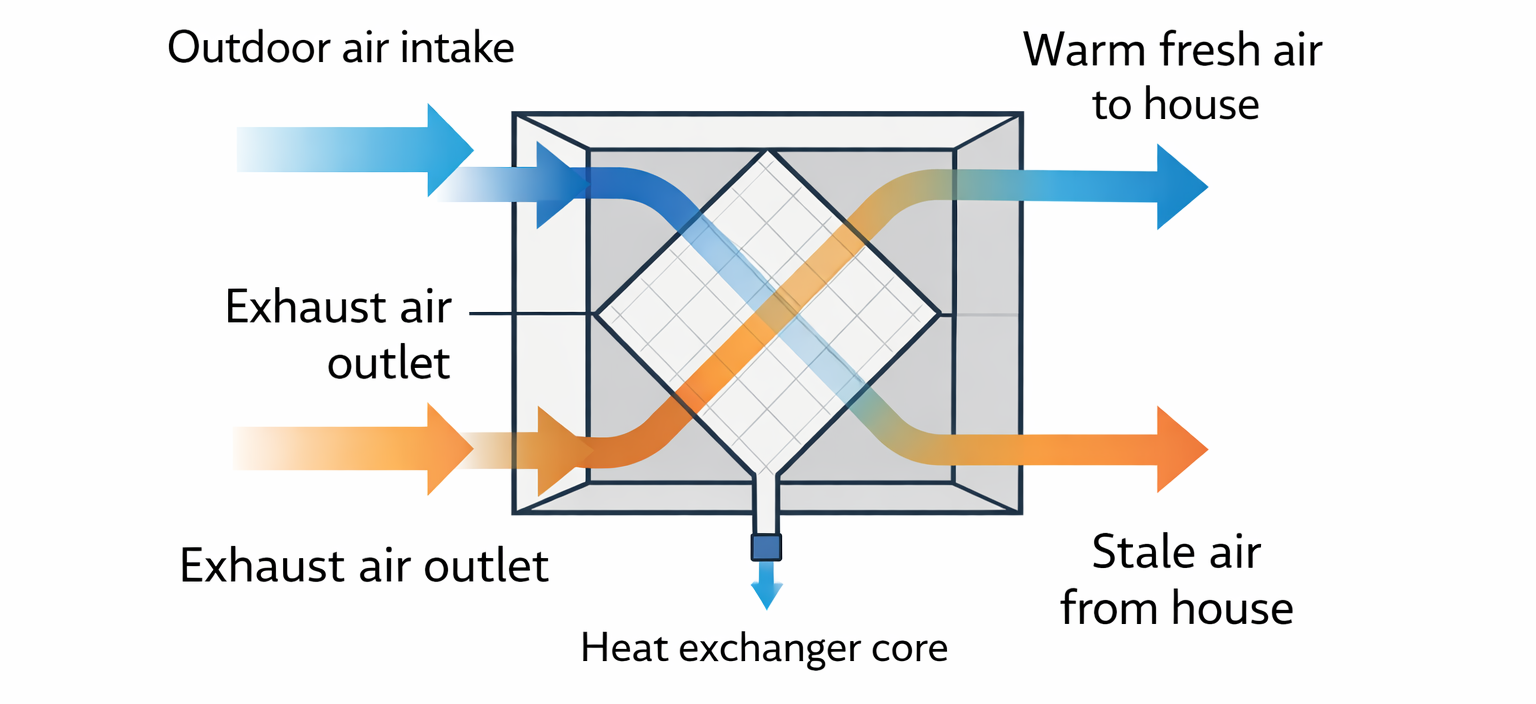
An HRV is designed to provide continuous background ventilation. It exchanges stale indoor air with fresh outdoor air while recovering heat to improve efficiency.
An HRV helps control overall humidity levels in the home, but it works slowly and evenly throughout the house. It is not designed to remove large bursts of moisture quickly.
Ressources Naturelles Canada explains that heat recovery ventilators are intended for continuous ventilation and improved air quality, while localized exhaust fans are used to remove moisture at the source.
That’s where bathroom fans come in.
Why Bathroom Fans Are Still Necessary
Bathroom fans remove moisture directly at the source before it spreads to other areas of the home. This is especially important in cold climates where moisture can quickly condense on cold surfaces.
Ressources Naturelles Canada also recommends using exhaust fans in kitchens and bathrooms to remove moisture and pollutants directly from the home before they spread through the ventilation system.
Without a bathroom fan:
- Moisture travels into bedrooms and hallways
- Indoor humidity rises quickly
- Windows frost or condense more easily
- Warm air carrying moisture can reach the attic
In cold climates where temperatures regularly drop below -20°C, this moisture has nowhere to go once it cools.
Common Mistakes in Cold Climate Homes
Many moisture problems come from small habits or installation issues, including:
- Turning the fan off immediately after showering
- Assuming the HRV will remove moisture later
- Bathroom fans venting into the attic instead of outdoors
- Fans that are undersized or rarely used
- No timer switch installed
These problems are very common in both older homes and newer airtight construction.
How Long Should a Bathroom Fan Run?
In cold climates, a good rule is to run the fan:
- During the entire shower
- For 20–30 minutes after showering
Timer switches work well because they remove the need to remember to turn the fan off later.
The goal is to remove moisture before it spreads through the home.
Signs Your Bathroom Fan Isn’t Doing Enough
You may need better ventilation if you notice:
- Mirrors staying fogged long after showers
- Condensation on nearby windows
- Peeling paint or swollen trim
- Musty smells in winter
- Increasing humidity levels throughout the house
These are early warning signs that moisture is not being removed fast enough.
Bathroom Fans and Indoor Humidity Work Together
Bathroom ventilation is one of the biggest factors affecting indoor humidity levels in winter.
If your home struggles with condensation or frost, it’s worth reviewing both humidity settings and bathroom ventilation habits.
You can learn more in What Indoor Humidity Should Be in Winter in Canada, where humidity levels are explained based on outdoor temperatures.
The Bottom Line
HRVs help manage overall air quality and background humidity, but they cannot replace bathroom fans.
In cold climates, removing moisture at the source is one of the most effective ways to prevent condensation, attic frost, and long-term moisture damage.
A properly used bathroom fan is a small habit that protects the entire home.
Other Related Articles
If you’re dealing with winter moisture or condensation problems, these articles may also help:
- What Indoor Humidity Should Be in Winter in Canada
- Why Ice Forms on Attic Nails in Winter (And What It Means for Your Home)
- Pourquoi Les Fenêtres S'Embuent-elles En Hiver?