
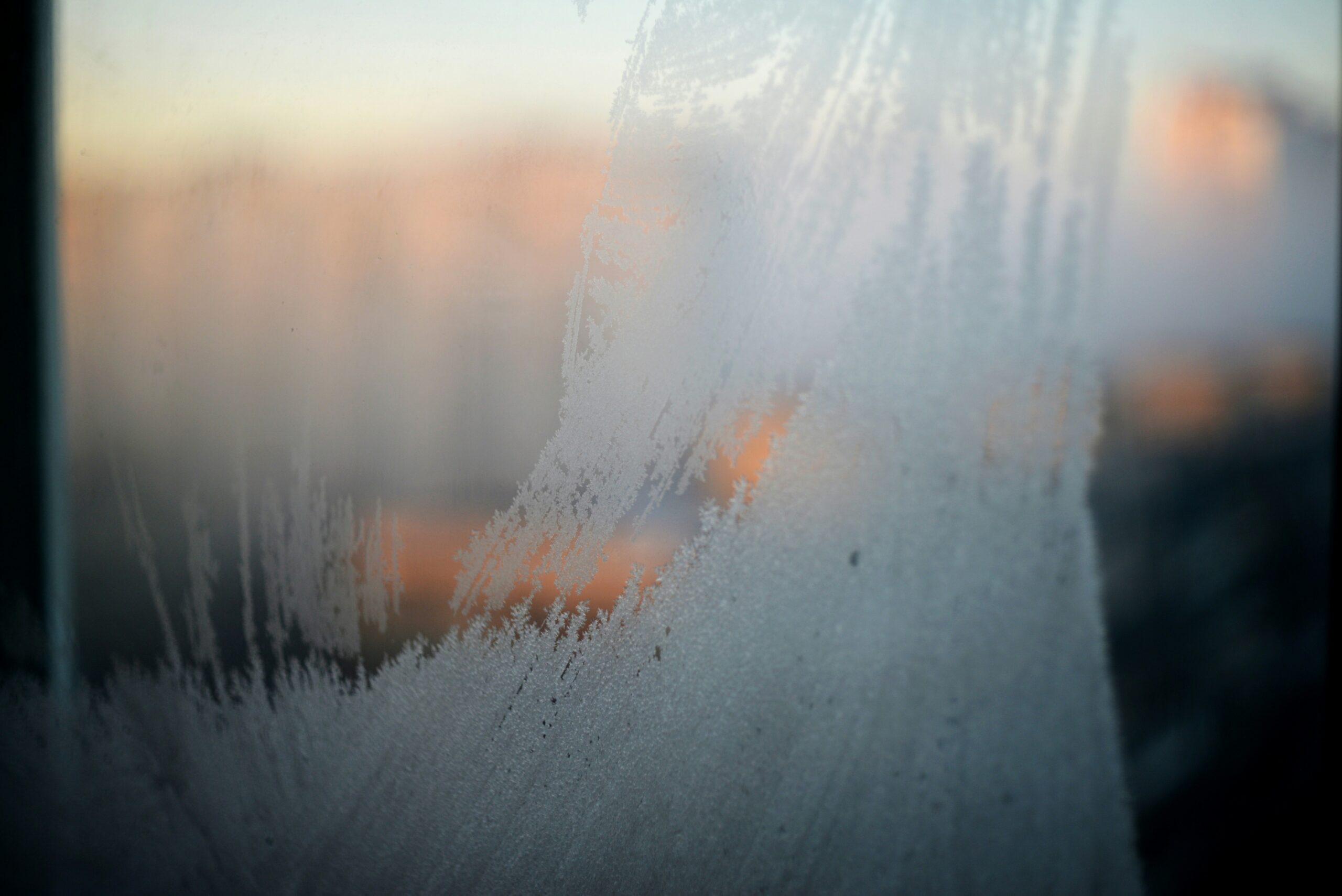
Seeing frost or condensation on the inside of your windows during winter is common in Canadian homes. In many cases it’s harmless — but sometimes it’s a sign of excess moisture, poor ventilation, or insulation problems.
This article explains why windows frost up in winter, what’s normal, what’s not, and when you should take action.
What Causes Window Frost in Winter
Window frost forms when warm, moist indoor air contacts a cold window surface. When the glass temperature drops below the dew point, moisture condenses and freezes.
Common contributors include:
- High indoor humidity
- Cold outdoor temperatures
- Poor airflow near windows
- Older or inefficient window units
Is Window Frost Normal in Canadian Winters?
Yes — to a point.
Light frost or condensation during very cold weather (−20°C or colder) can be normal, especially overnight. It often clears once indoor temperatures stabilize and airflow improves.
It becomes a concern when:
- Frost appears daily
- Ice builds up thickly
- Water pools on the sill
- Mold or staining develops
The Role of Indoor Humidity
Humidity is the biggest factor.
Typical winter targets:
- 30–35% RH at −10°C
- 25–30% RH at −20°C
- Lower in extreme cold
High humidity combined with cold glass almost guarantees condensation or frost.
Why Some Windows Frost More Than Others
You may notice frost only on certain windows.
Common reasons:
- North-facing exposure
- Poor insulation around the frame
- Furniture or curtains blocking airflow
- Older double-pane or single-pane windows
This doesn’t always mean the window is failing.
How to Reduce Window Frost
Simple steps often help:
- Lower indoor humidity slightly
- Run bathroom and kitchen exhaust fans
- Open blinds or curtains to improve airflow
- Ensure warm air can circulate near windows
Avoid wiping frost daily — repeated moisture can damage finishes.
When Frost Indicates a Bigger Problem
Window frost may point to:
- Air leaks around the window frame
- Insulation gaps
- Excess moisture sources in the home
If frost persists even with low humidity, air sealing or insulation may be needed.
Related Cold-Climate Issues
Moisture and temperature changes affect more than windows.
If you’re dealing with seasonal movement elsewhere, see:
Final Thoughts
Window frost in winter is common in Canadian homes, especially during cold snaps. Occasional frost is usually harmless, but persistent moisture should be addressed to prevent damage and comfort issues.
Understanding the cause helps you fix the problem without unnecessary upgrades.